
There’s nothing quite as frustrating as pulling into the driveway after a long day, pressing the garage door opener, and hearing nothing but silence. Or worse, walking out in the morning only to find the door stuck halfway open. Garage doors are one of the hardest-working systems in any home, opening and closing thousands of times a year without much thought from the people who rely on them. That constant use, combined with exposure to the elements, means wear and tear is inevitable.
So out of all the issues a homeowner might face, which garage door repair is the most common? This guide breaks down the top culprits behind service calls, why they happen so often, and what every homeowner should know before reaching for the phone or attempting a fix on their own.
Why Garage Door Repairs Are So Common
The average garage door goes through roughly 1,500 cycles per year, with each cycle counting as one open and one close. For families that use their garage as the main entry point to the home, that number can easily climb higher. Multiply that by the heavy weight of the door, the moving parts involved, and the daily strain on every component, and it becomes clear why garage door repair is one of the most frequently requested home services.
The system itself is more complex than it looks. A typical residential garage door involves springs, cables, rollers, tracks, hinges, an opener motor, sensors, and weather seals, all working together in sync. When even one of these components fails, the entire system can grind to a halt. On top of that, exposure to heat, cold, humidity, and dust accelerates wear, making certain repairs more common than others.
The Most Common Garage Door Repair Is a Broken Spring
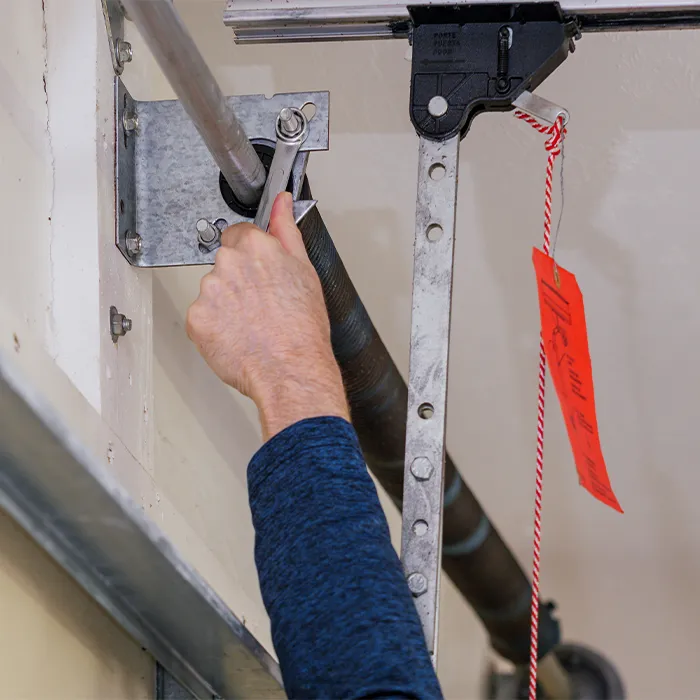
If there’s one repair that tops every garage door technician’s list, it’s a broken spring. Torsion and extension springs are the unsung heroes of every garage door system, carrying the entire weight of the door and making it possible for the opener or your own hands to lift it with ease. Without functioning springs, even the most powerful opener won’t be able to raise a door that can weigh anywhere from 150 to 400 pounds.
The reason broken springs lead the pack in garage door repair calls comes down to lifespan. Most standard springs are rated for around 10,000 cycles, which translates to about seven to ten years of average use. After that point, the metal fatigues, the coils weaken, and eventually, the spring snaps. Homeowners often describe the moment a spring breaks as sounding like a gunshot coming from the garage. Once it goes, the door becomes nearly impossible to operate safely.
Warning signs of a failing spring include a door that feels unusually heavy when lifted manually, jerky or uneven movement during operation, visible gaps in the coil, or an opener that strains and struggles to lift the door. Because springs are under extreme tension, this is one repair that should always be left to trained professionals.
Other Frequent Garage Door Repair Issues
While broken springs are the most common, several other issues come up regularly enough to deserve attention.
Frayed or snapped cables are a close runner-up. These cables work alongside the springs to control the door’s movement, and when they wear out or break, the door can become unbalanced or refuse to move altogether. Worn rollers are another frequent culprit, especially in older systems. When rollers wear down or fall out of alignment, the door becomes noisy, jerky, and harder for the opener to operate smoothly.
Bent or damaged tracks also send homeowners reaching for the phone. A small dent or misalignment in the track can cause the door to bind, grind, or stop moving entirely. Faulty garage door openers round out the list, with common issues ranging from dead remote batteries and misaligned safety sensors to burned-out motors and worn drive gears. Finally, weatherstripping and bottom seals tend to deteriorate over time, leading to drafts, water leaks, and pest intrusion that prompt timely replacement.
What Causes Garage Door Components to Wear Out?
Most garage door repairs aren’t random. They’re tied to a handful of predictable factors. Daily use is the biggest one. Every cycle adds strain to the springs, cables, rollers, and motor, gradually wearing them down. Homes that use the garage as the primary entry point will naturally see components age faster than homes where the garage is used only occasionally.
Lack of routine maintenance is another major contributor. Without periodic lubrication, tightening, and inspection, small issues escalate into bigger ones. A roller that just needed grease can wear out completely. A loose bolt can lead to a misaligned track. Weather exposure also plays a significant role, particularly in regions with harsh winters or humid summers. Temperature swings cause metal to expand and contract, while moisture leads to rust and corrosion.
Improper installation can shorten the life of any garage door system, which is why working with a qualified installer matters from day one. And finally, age catches up with every system eventually. Even the best-built garage door has a lifespan, and after fifteen to twenty years, repair frequency tends to climb.
Warning Signs That Garage Door Repair Is Needed
Knowing the early symptoms of a failing garage door can save homeowners from a sudden breakdown at the worst possible time. Unusual noises are often the first red flag. Grinding, scraping, popping, or rattling sounds typically point to worn rollers, loose hardware, or strained springs. A door that moves slowly, jerks during operation, or hesitates before opening is another sign that something inside the system needs attention.
Doors that reverse on their own without obstruction often have misaligned or dirty safety sensors. Sagging sections, uneven gaps along the bottom, or a door that looks crooked when closed usually indicate spring or cable issues. Remotes that work inconsistently, wall buttons that no longer respond, or openers that hum without lifting the door all suggest opener-related problems. Catching these signs early gives homeowners the chance to address small repairs before they turn into major ones.
Why DIY Garage Door Repair Isn’t Always the Answer
It can be tempting to handle garage door repair as a weekend project, especially with countless tutorials available online. But certain repairs carry real safety risks. Springs and cables are under enormous tension, and a single wrong move can lead to serious injury. Replacing them requires specialty tools, proper training, and an understanding of how the entire system is balanced.
Beyond the safety concerns, DIY attempts often lead to more expensive repairs down the line. A spring installed with the wrong tension can damage the opener. A track adjusted incorrectly can throw the entire door out of alignment. A cable threaded improperly can snap and cause damage to the vehicle or property inside the garage. Professional technicians have the training, tools, and experience to diagnose the root cause of an issue and fix it correctly the first time.
How to Prevent the Most Common Garage Door Repairs
The good news is that many of the most common repairs can be delayed or even avoided with a bit of preventive care. Lubricating moving parts every six months keeps rollers, hinges, and springs operating smoothly. Tightening loose hardware once or twice a year prevents small problems from turning into bigger ones. Visually inspecting the cables, springs, rollers, and tracks for signs of wear gives homeowners a heads-up before a failure occurs.
Testing the auto-reverse safety feature is another important habit. Placing a small object in the door’s path and pressing the opener should cause the door to reverse immediately. If it doesn’t, the sensors or settings need attention. Above all, scheduling an annual tune-up with a professional is the single most effective way to extend the life of the system. A trained technician can catch worn components before they fail, calibrate the door for smooth operation, and keep everything running safely.
When to Call a Professional for Garage Door Repair
Some garage door issues can wait a few days. Others can’t. Anytime a spring breaks, a cable snaps, or the door refuses to open or close, it’s time to call a professional immediately. The same goes for any situation involving visible damage to the door panels, a motor that’s stopped working, or a door that’s come off its tracks.
Even when the issue seems minor, it’s worth getting a professional opinion. What looks like a small problem on the surface can sometimes signal a larger issue underneath. A trained technician can quickly identify what’s wrong, recommend the right fix, and get the system back to safe, reliable operation.
Trust Howell Door for Reliable Garage Door Repair
When something goes wrong with a garage door, homeowners need a team they can count on for honest answers and quality work. Howell Door has built its reputation on dependable service, skilled technicians, and a deep commitment to keeping homes safe and running smoothly. Whether it’s a broken spring, a worn cable, a faulty opener, or any other common repair, Howell Door delivers solutions that last.
Anyone noticing the warning signs covered in this guide is encouraged to reach out to Howell Door for a professional inspection. Catching small problems early keeps repair costs down and helps avoid the headache of a sudden breakdown. With the right team on the job, a well-maintained garage door can serve a home reliably for years to come.