
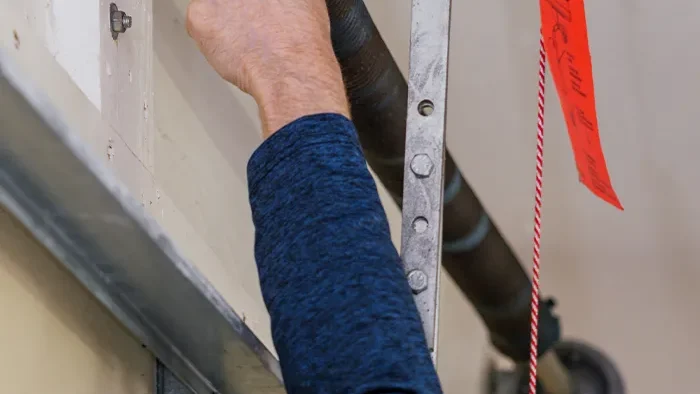
One of the most telling moments in any garage door spring repair happens before a single tool comes out. The technician disconnects the opener, lifts the door to waist height, and lets go. A door on healthy springs floats at mid-travel. A door on failing springs falls. That test tells an experienced technician more about the spring system than almost anything else, and it is the first check Howell Door technicians perform on every service call across West Chester and the surrounding Chester County communities.
How long a garage door spring repair lasts depends on the springs installed, the installation precision, and how consistently the system is maintained afterward. Understanding these factors is what separates homeowners who get the full rated lifespan out of a repair from those who find themselves scheduling another service call far sooner than expected. This guide breaks down each factor in detail.
Understanding What Garage Door Springs Actually Do
Springs are the mechanical reason a 200 to 400-pound garage door can be lifted by a single person or a modest opener motor. The spring system counterbalances the full door weight, storing energy as it closes and releasing it in a controlled motion as it opens. Torsion springs mount along a steel shaft above the door opening and wind under tension with every close cycle. Extension springs run along the horizontal tracks and work by stretching and retracting. Both are rated to a specific cycle count before the steel fatigues and fails. That rating, not a calendar date, is the real measure of how long a spring repair will last.
How Long Does a Garage Door Spring Repair Actually Last?
A standard residential torsion spring carries a manufacturer cycle rating of 10,000 cycles. At three to four cycles per day, that translates to roughly seven to nine years of service life. Higher-cycle springs rated at 20,000 or 30,000 cycles represent a meaningful upgrade for households with heavier daily use. The cycle rating is a starting point, not a guarantee. Installation precision and ongoing maintenance determine whether a spring reaches its rated count or falls short.
What Is a Spring Cycle and Why Does It Matter?
At four cycles per day, a 10,000-cycle spring runs out in roughly seven years. At six or more, that same spring wears out at under five. A household with multiple drivers using the garage as the primary entry point can easily reach six daily without tracking it.
Chester County homes run higher cycle counts than average. During the region’s winters, when walkways are icy and temperatures drop into single digits, the garage becomes the default entry point every day. That seasonal spike is one reason Howell Door technicians across West Chester see springs fail earlier than their ratings suggest.
Why Springs Are Always Replaced in Pairs
When one torsion spring fails, a professional technician replaces both, not just the broken one. The reason is mechanical, not commercial.
Both springs were wound on the same day, have run the same number of cycles, and absorbed the same load and temperature swings since installation. When one reaches 10,000 cycles and snaps, the other is there too. Replacing only the failed spring leaves a new component paired with one at the end of its service life. Within months the second fails, the door loses its counterbalance, and the opener absorbs strain it was never built to handle. Replacing both at once restores the full system and eliminates that second call.
What Affects How Long a Garage Door Spring Repair Lasts?
Installation tension is the variable most homeowners never consider. A torsion spring is wound to a specific number of turns based on the door’s exact weight and height. Undertorqued springs force the opener to carry part of the load on every lift. Overtorqued springs cause the door to open under more force than the cables and bottom brackets can absorb cleanly. Either error shortens the repair and accelerates wear on connected components.
Lubrication is the most commonly skipped step after a spring repair. Springs that go unserviced develop surface rust at the coil interfaces and corrosion at the end cones. In Chester County, where summer humidity and winter freeze-thaw cycles work against unprotected metal, an unlubricated spring loses meaningful service life. Standard sprays like WD-40 are not substitutes. They act as degreasers and strip the coating that slows corrosion on spring steel.
Door balance is the third factor. A door that drifts out of balance from a settling frame, worn cable drum, or misadjusted anchor places uneven load on one spring with every cycle, and that asymmetric stress is the most common reason one spring in a pair fails well before the other.
Signs the Spring Repair May Be Wearing Out
The manual lift test from the opening of this piece is the most reliable field check a homeowner can perform. A healthy spring system makes the door feel nearly weightless at mid-travel. When that changes and the door feels heavier than it did a year ago, the springs are losing tension.
An opener that strains audibly during the lift, visible gaps in the spring coil, rust along the coil body, or a door that no longer sits level when closed all warrant a professional inspection before full failure. Acting on these signs turns a scheduled repair into an avoided emergency.
High-Cycle Springs — Are They Worth It?
For a household in West Chester or Chester County where the garage runs six or more cycles daily, upgrading to high-cycle springs is the smarter financial decision over a ten-year window. A 30,000-cycle spring outlasts three standard 10,000-cycle replacements. That means two fewer repair visits, two fewer sets of labor costs, and years of reduced stress on the cables, drums, and opener motor. For high-use households, the higher upfront cost is offset well within the first replacement cycle.
Why Garage Door Spring Repair Is Always a Professional Job
Torsion springs operate under stored mechanical energy determined by the spring’s wire diameter, coil count, and wind turns. Releasing that energy in an uncontrolled way causes serious injury. Winding and unwinding torsion springs require dedicated steel winding bars matched to the specific spring diameter. The wrong bar size or a lost grip during winding can cause the bar to eject at force or the spring to uncoil violently.
The ANSI/DASMA 102 standard, which sets performance and safety requirements for residential garage door systems in the United States, identifies spring replacement as requiring trained installation personnel because of the stored energy involved. Howell Door technicians have been handling garage door spring repair across West Chester and Chester County since 1939, arriving same-day in most cases with the correct spring inventory and winding equipment to complete the job safely.
How to Extend the Life of a Garage Door Spring Repair
Applying a lithium-based garage door lubricant to the full coil body of each spring every six months is the highest-return maintenance habit for any garage door system. It reduces friction at the coil interfaces, slows surface oxidation, and protects the end cone connections from corrosion. In Chester County, where seasonal humidity and temperature swings accelerate metal fatigue, this step measurably extends the time between spring repairs.
The manual balance test is the second habit worth building. Disconnect the opener using the red emergency release cord, lift the door to waist height, and release it. A door in proper balance holds position without assistance. One that drops or floats upward needs professional adjustment before the imbalance shortens spring life. Combining these habits with an annual tune-up is the most reliable approach to maximizing any garage door spring repair.
What to Expect From a Professional Garage Door Spring Repair
A professional spring repair at Howell Door begins with the manual balance test and a full visual inspection before any hardware is touched. Both springs are checked for fatigue, cables for fraying, drums for alignment, and winding cones for secure seating. Both springs are then replaced as a matched pair, wound to the precise turn count for the door’s exact weight and height, and the door is tested through multiple full cycles under opener power and by hand. Howell Door backs every repair with a one-year workmanship warranty, and direct manufacturer relationships mean factory parts warranties are identified and applied in the field.
Trust Howell Door for Reliable Garage Door Spring Repair
Howell Door has been the trusted name for garage door spring repair across West Chester and Chester County since 1939. More than eight decades of hands-on experience, same-day service on most calls, honest assessments, and a one-year workmanship warranty on every repair are what homeowners across the area have relied on.
At the first sign of spring wear, a heavier door, a straining opener, or a visible coil gap, reaching out to Howell Door for a professional inspection is the move that saves money and protects the full system. A proactive garage door spring repair is always faster, safer, and less disruptive than waiting for the snap.